Asanas

Asanas

 "Yoga is a priceless gift to an intelligent person - it helps him become wise. A wise person it will make a god. A foolish person who takes up this practice inevitably turns into an idiot, and an idiot it always leads to death. As for the ordinary, unremarkable person, he has neither the need nor the time to practise yoga - he has more important things to do.

So before you touch this remarkable teaching, try to be completely honest with yourself. Ask yourself: who am I? And why do I want this? Your further fate depends on the answer."

  The Teacher's parting words

 A detailed description of the most important asanas: 

Paripurna and Ardha Navasana (Boat Pose)

Dhanurasana (Bow Pose)

Supta Virasana (Diamond Pose)

Chaturanga Dandasana (Four-Limbed Staff Pose)

In this section

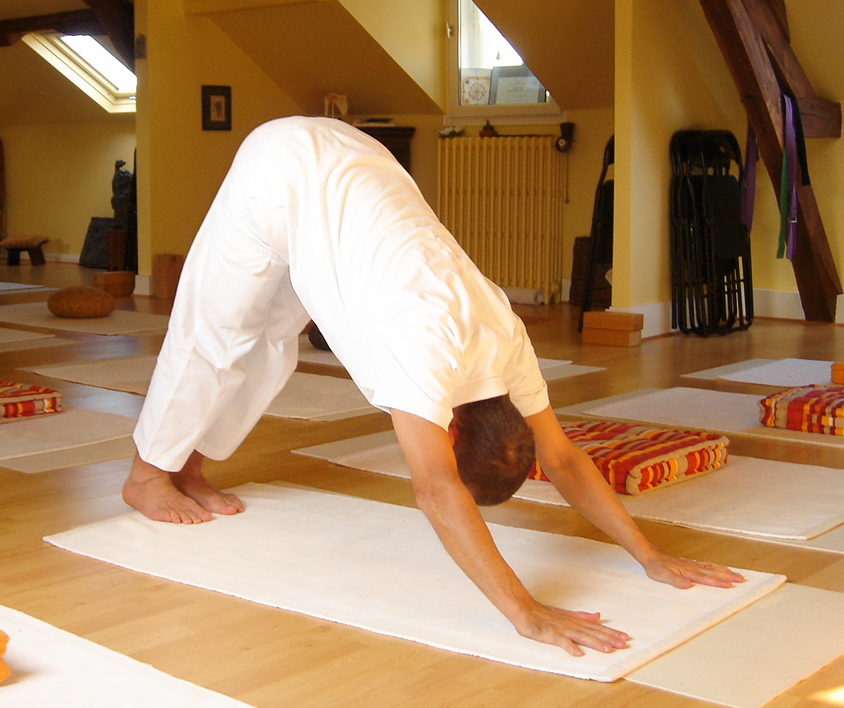
Adho Mukha Svanasana (Downward Facing Dog) Adho means "downward facing", mukha is "face" and svana is "dog". The asana resembles a dog stretching with i… Ardha Matsyendrasana (Half Lord of the Fishes Pose) Matsya means "fish" and Indra is a god. Shiva once taught yoga on a riverbank, and the fish that listened bec… Ardha Chandrasana (Half Moon Pose) Ardha means "half" and chandra means "moon". The pose resembles a crescent moon. Bhujangasana (Cobra Pose) From bhujanga, meaning snake. In this pose you lie flat on the floor face down, lift the torso and take the h… Virabhadrasana I (Warrior Pose I) Daksha held a great sacrifice but invited neither his daughter Sati nor her husband Shiva. Deeply insulted, S… Virabhadrasana II (Warrior Pose II) Virabhadra means warrior - the hero after whom the asana is named. Virabhadrasana III (Warrior Pose III) Virabhadra means warrior - the hero after whom the asana is named. Virasana (Hero Pose) Vira means heroic, brave, a hero, and the pose recalls a warrior seated. Virasana looks simple at first glanc… Vrikshasana (Tree Pose) Vriksha means tree. In this pose the whole body extends upward, like a tree. Vrischikasana I (Scorpion Pose) From "vrischika", a scorpion. To sting its prey the scorpion arches its tail over its back and strikes beyond… Dandasana (Staff Pose) Danda means staff, rod or stick. Like Tadasana, Dandasana is the base pose for most of the seated asanas. Janu Sirsasana (Head-to-Knee Pose) From janu, knee, and sirsa, head. In this seated pose one leg is extended and the other bent at the knee; bot… Jathara Parivartanasana (Revolved Abdomen Pose) Jathara means belly, and parivartana means turning around, revolving. In this asana the abdomen receives an i… Marichyasana I (Sage Marichi's Pose) This asana is named after the sage Marichi, son of Brahma the creator and grandfather of Surya, the sun god. Marichyasana III (Sage Marichi's Pose) This asana is named after the sage Marichi, grandfather of the sun god. Here the spine twists to the side, wh… Parivritta Trikonasana (Revolved Triangle Pose) Parivritta means turned, revolved or turned back, and trikona means triangle. This is the revolved triangle p… Parivritta Parsvakonasana (Revolved Side Angle Pose) Parivritta means turned, revolved or turned back; parsva is the side and kona is the angle. This is the revol… Parighasana (Gate Pose) Parigha means the crossbar or beam used to bar a gate. In this pose the body resembles such a bar across a ga… Parsvottanasana (Intense Side Stretch Pose) Parsva means side or flank, and uttana means intense stretch. In this pose the sides of the chest are stretch… Paschimottanasana (Seated Forward Bend) Also known as Ugrasana or Brahmacharyasana. "Paschima" means west, and stands for the whole back of the body … Prasarita Padottanasana (Wide-Legged Standing Forward Bend) "Prasarita" means spread apart, "pada" means foot or leg. In this pose the legs are set wide apart and fully … Purvottanasana (Upward Plank Pose) "Purva" means east, and also the whole front of the body from the forehead to the toes; "uttana" means an int… Salamba Sarvangasana (Supported Shoulder Stand) "Alamba" means support and "sa" means with, so "salamba" is supported. "Sarvanga" means the whole body - in t… Salamba Sirsasana (Supported Headstand) "Salamba" means with support, "shirsha" means head. The headstand is one of the most important asanas in yoga… Siddhasana (The Accomplished Pose) "Siddha" is the name of semi-divine beings of great purity and holiness who possess supernatural powers, the … Tadasana (Mountain Pose). Samasthiti "Tada" means mountain, "sama" upright and still, "sthiti" standing quietly. In Tadasana you stand firm and st… Trianga Mukhaikapada Paschimottanasana (Three-Limbed Forward Bend) "Trianga" means three limbs or three parts - here the feet, the knees and the buttocks. "Mukhaikapada" descri… Utkatasana (Chair Pose) From "utkata", meaning powerful, fierce, uneven. The asana resembles sitting in an imaginary chair: the knees… Uttanasana (Standing Forward Bend) "Ut" means intensity or force, "tana" means to stretch. Here the spine is stretched strongly: from Tadasana t… Utthita Parsvakonasana (Extended Side Angle Pose) "Parshva" means side or flank, "kona" means angle. This is the extended side angle pose: one knee bends to a … Utthita Trikonasana (Extended Triangle Pose) "Utthita" means extended, "trikona" means triangle. Yoga practice is hard to imagine without the triangle: it… Ustrasana (Camel Pose) "Ushtra" means camel. The asana imitates the shape of a camel, making the spine concave: from kneeling, the t… Halasana (Plough Pose) From "hala", a plough, which the body resembles in this pose. The asana is part of Sarvangasana and its conti… Savasana (Corpse Pose). Mritasana "Shava" or "mrita" means corpse. The aim of Savasana is to imitate one: by keeping the body still and the min… Salabhasana (Locust Pose) From "shalabha", a locust. The pose resembles a locust resting on the ground, hence the name: lying face down…